
You might have a rough estimate. You might know your annual income.
But understanding exactly when dividend income is expected to arrive—and how much—is often harder than investors expect.
That's where a dividend tracker can help.
What Is a Dividend Tracker?
A dividend tracker is a tool that helps investors organize, monitor, and project dividend income across their portfolio.
Instead of manually tracking payments across brokerage statements, spreadsheets, and company announcements, a dividend tracker brings everything together in one place.
Most dividend trackers help investors see expected dividend income, payment schedules, dividend history, income by holding, and future income projections.
The goal is not simply to track what happened. The goal is to understand what may happen next.
Why Many Investors Start With Spreadsheets
Most dividend investors don't begin with a dedicated tracking tool. They begin with a spreadsheet.
For smaller portfolios, spreadsheets can work well. You can track holdings, share counts, dividend rates, and annual income estimates. Many investors use this approach for years.
The challenge comes as portfolios become larger and more complex.
The Problem With Tracking Dividends Manually
Over time, income portfolios change. Investors add positions, sell holdings, reinvest dividends, receive dividend increases, and experience occasional dividend cuts.
Every change creates additional maintenance.
What began as a simple spreadsheet can gradually become a collection of formulas, notes, and manual updates.
For retirees who rely on portfolio income, this creates a frustrating problem: the information exists. It's simply difficult to organize.
Why Retirees Often Need More Than Annual Income Estimates
Many investors focus primarily on annual yield. Yield matters.
But retirees often need answers to more practical questions: Which months generate the most income? Where are potential income gaps? Which positions produce the most cash flow? How much income is expected over the next year? When are payments likely to arrive?
Annual income totals don't answer those questions. A dividend tracker can.
What Features Should a Good Dividend Tracker Include?
Future Income Projections
The ability to estimate expected dividend income over the coming months and year.
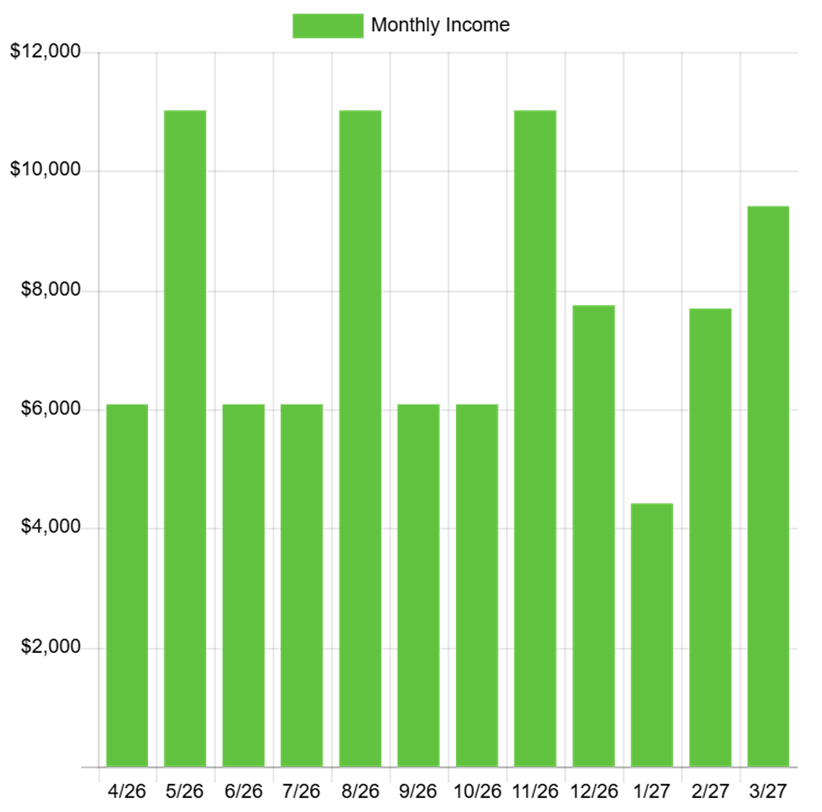
Monthly Income Views
A clear picture of how income is distributed throughout the calendar.
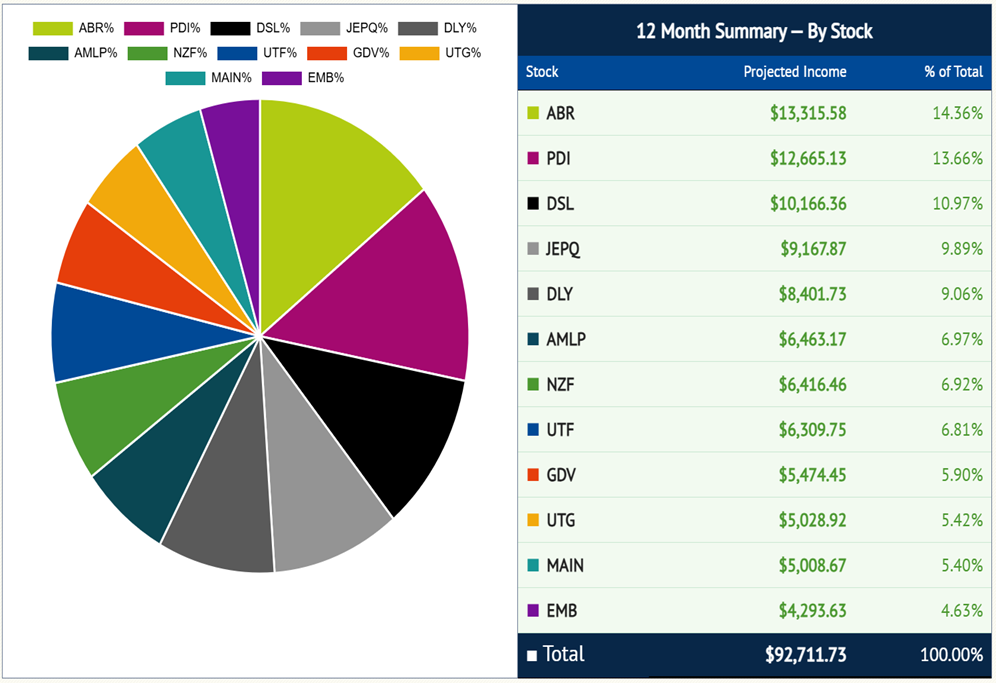
Income by Holding
The ability to see which positions contribute the most cash flow.
Dividend Event Tracking
Visibility into declarations, ex-dividend dates, and payment schedules.
Portfolio Organization
A single place to monitor income-producing investments.
Do You Need a Dividend Tracker?
Not necessarily.
Some investors are perfectly comfortable maintaining spreadsheets indefinitely. Others prefer automated tools that reduce manual work and provide a clearer picture of future income.
The right approach depends on portfolio size, number of holdings, income planning needs, and personal preference.
The larger and more income-focused a portfolio becomes, the more valuable visibility tends to become.
Key Takeaways
- A dividend tracker helps investors organize and monitor dividend income.
- Most investors begin with spreadsheets but often encounter limitations over time.
- Retirees frequently need more than annual yield estimates.
- Monthly income projections can provide additional planning clarity.
- The best dividend trackers focus on future income, not just historical payments.